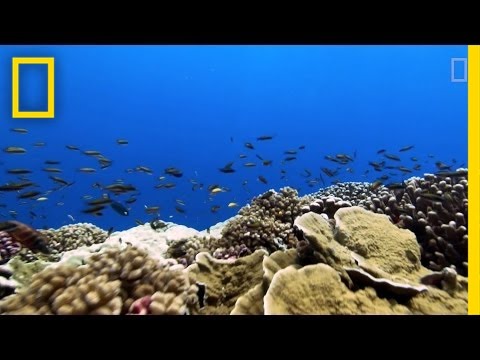

How is Climate Change effecting the Oceans
Facts
2020 was the second-warmest year on record based on NOAA’s temperature data, and land areas were record warm.
The 10 warmest years on record have occurred since 2005
Achieving the mitigation targets set by the Paris Agreement on climate change and limiting the global average temperature increase to well below 2°C above pre-industrial levels is crucial to prevent the massive, irreversible impacts of ocean warming on marine ecosystems and their services.
Earth’s temperature has risen (0.08° C) per decade since 1880,
Might seem small, but it means a significant increase in accumulated heat. That extra heat is driving regional and seasonal temperature extremes, reducing snow cover and sea ice, intensifying heavy rainfall, and changing habitat ranges for plants and animals—expanding some and shrinking others.
How it effects the Ocean
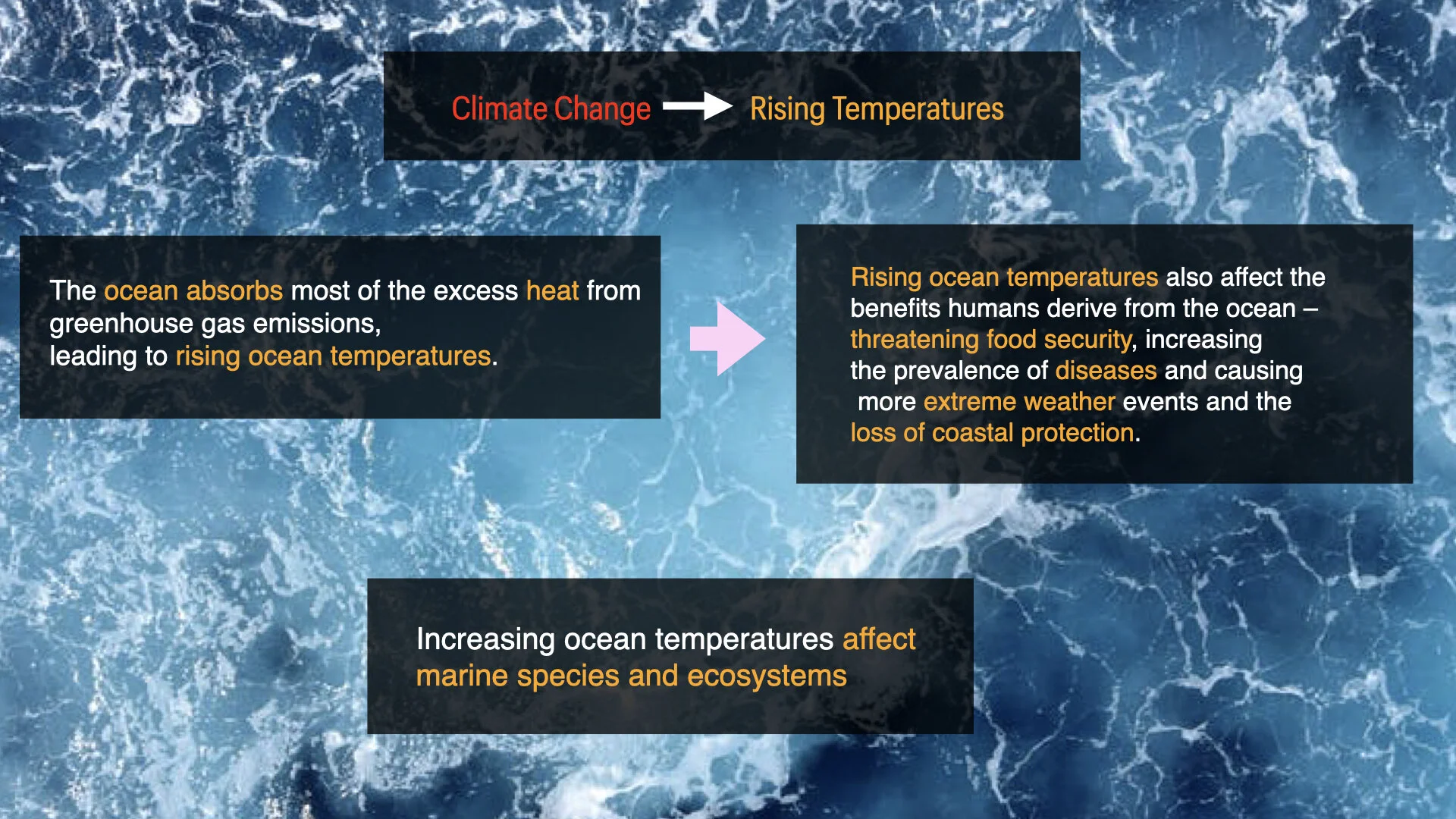
The ocean absorbs vast quantities of heat as a result of increased concentrations of greenhouse gases in the atmosphere, mainly from fossil fuel consumption. The Fifth Assessment Report published by the Intergovernmental Panel on Climate Change (IPCC) in 2013 revealed that the ocean had absorbed more than 93% of the excess heat from greenhouse gas emissions since the 1970s. This is causing ocean temperatures to rise.
Why is Marine life so important ?
Lets look at one valuable species and what it offers:
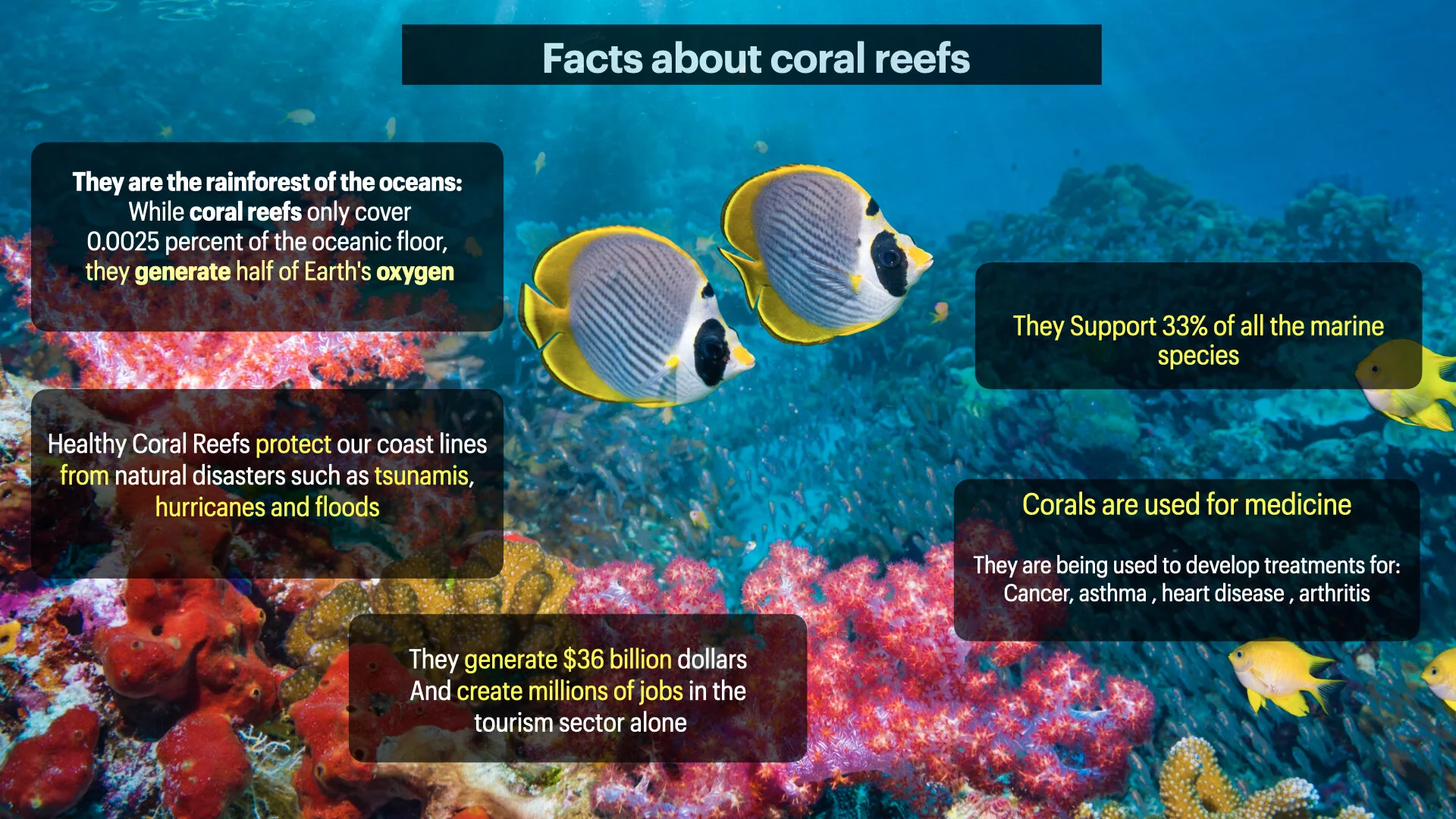
Recent studies have revealed that 50% of the world's coral reefs have already been destroyed, and another 40% could be lost over the next 30 years.
How does it affect Greece?
Sea Level Rise
Greece has the longest coast line in the Mediterranean, therefore the sea level rise is going to cause lots of problems to all the coasts.
Extreme Weather
Warmer temperatures = Sea lever rise = extreme weather such as floods, earthquakes, tsunamis (warmer winter and summer)
Fish Migration
Pollution and warmer waters will lead the marine life to migrate. This will effect the local economies and mostly the fisherman.
Oxygen Quality
The sea is responsible for half of the oxygen produce on earth. Warmer water= less oxygen
Related Videos: